
October 21, 2026 · Quartz Epoxy Pro
Can you put a second coat of epoxy on a garage floor?
Yes, you can put a second coat of epoxy on a garage floor, as long as the first coat is sound and well bonded to the concrete. The old surface has to be cleaned and abraded first: sand it until the gloss is dull, vacuum it, and wipe it clean. If the existing epoxy is peeling or lifting, do not coat over it. Grind those areas back to bare concrete first.
Our installation guide says it plainly: an epoxy floor can be refreshed with a new coat without removing the existing layer, once it is properly cleaned and abraded.
When a second coat makes sense
Most people recoat for one of a few reasons:
- Worn traffic lanes. Tire paths and walkways take the most wear. If the coating is still bonded but looks tired, a fresh coat brings it back.
- A thin first coat. If the first pour was stretched past 100 square feet per kit, you usually see streaks, thin spots and a surface that never leveled out. A second coat at the full coverage rate fixes that.
- Uneven color or texture. Patchy aggregate or a blotchy base coat can be evened out with a new coat and an even spread of quartz.
- Small damage. Scratches and scuffs in an otherwise healthy floor. For a few small spots, a touch up with additional kit material may be enough.
When a second coat will not work
New epoxy only holds as well as whatever it is stuck to. If the layer underneath is failing, the new coat fails with it. Do not recoat over:
- Epoxy that is peeling, flaking or lifting at the edges
- Areas where the coating has come loose from the concrete
- Soft or tacky spots that never cured
Peeling almost always traces back to prep. Our installation guide notes that about 95% of epoxy failures come back to inadequate surface prep. The fix is the same every time: grind the affected area down to bare concrete, clean it, and recoat. If large parts of the floor are failing, grinding the whole floor to bare concrete is usually the cleaner job. See what can go wrong with an epoxy floor for the common failures.
How to check your existing coat
Walk the whole floor in good light. Look closely at the edges, the tire lanes and anywhere water or oil sits, and try to lift any suspicious edge with a putty knife. If the coating comes up in sheets or chips away easily, that area is not bonded and has to come out. Not sure what you are looking at? Send us photos or call and we will tell you honestly whether a recoat makes sense.
How to prep an epoxy floor for a second coat
Prep for a recoat is lighter than prep for bare concrete, but it is not optional.
- Clear and clean. Empty the garage, sweep and vacuum. Scrub with a concrete cleaner or degreaser, paying extra attention to oil spots. Rinse well.
- Let it dry fully. Any moisture left on the surface works against the bond.
- Repair failed areas. Grind any peeling or loose coating down to bare concrete. Fill cracks, pits and holes with concrete patch compound or epoxy crack filler and let it cure fully. Never use silicone fillers.
- Abrade the whole surface. Sand the existing epoxy until the gloss is completely dull. No shiny spots should remain. Shiny means the new coat has nothing to grip.
- Vacuum everything. Sanding dust left on the floor acts as a barrier layer between the old coat and the new one. Vacuum thoroughly, including edges and corners.
- Wipe clean. Go over the surface one last time so it is free of dust and residue before you mix.
Prep any exposed bare concrete like a new floor, ground to a texture like 60 grit sandpaper. Our post on grinding vs acid etching explains why grinding is the method we recommend. Primer, sold separately, is strongly recommended for older or porous concrete. Full prep steps are in our installation guide.
Use the full coverage rate, even on a second coat
This is where a lot of recoats go wrong. Do not stretch the material just because it is a refresh. 1 kit covers 100 square feet at a target thickness of about one eighth inch, and that rate does not change on a second coat. A thin coat will not level properly, and you will end up with the same streaks you were trying to fix.
- 1 car garage, about 200 sq ft: 2 kits
- 2 car garage, about 400 sq ft: 4 kits
- 2.5 car garage, about 500 sq ft: 5 kits
Measure length x width, divide by 100 and round up. Our guide on how many epoxy kits you need has more examples. Our indoor quartz sand epoxy kit comes in Marble Grey and Desert Grey at $249 and Black at $300, so a 2 car recoat runs $996 in grey or $1,200 in Black.
Follow the same temperature and humidity limits
A second coat is still a full epoxy pour, so every rule from the first coat applies:
- Apply only between 41°F and 90°F. The ideal cure range is 68°F to 77°F.
- Below 55°F, cure time can double or more. Heat above 75°F shortens pot life, and above 85°F you should work in smaller batches.
- Relative humidity must be below 65%.
- Pot life is 20 to 30 minutes after mixing begins. Have your tools ready before you open the containers.
- Mix one kit at a time with a drill and mixing paddle for 3 to 5 minutes, scraping the sides and bottom. Do not mix by hand.
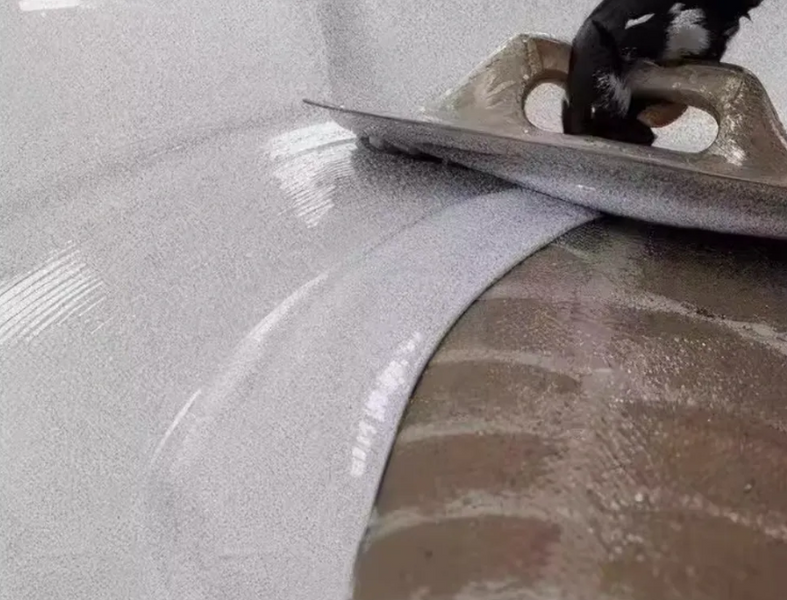
Pour starting in the far corner and work toward the door. Spread with a 22 inch squeegee in 100 to 150 square foot sections, overlap 4 to 6 inches and keep a wet edge. Distribute the quartz aggregate evenly right after pouring, then go over each area with a defoaming roller, 2 to 3 slow passes with 50% overlap. If bubbles were a problem on your first coat, read how to fix bubbles in an epoxy floor before you start.
Recoating a floor you just poured
If you poured recently and want to add a second coat, call us before you sand or pour anything. The right timing depends on your temperature, humidity and how far the first coat has cured, and it is not something we want you guessing at. Reach us at 602.600.0781, Monday to Friday, 8am to 5pm Arizona time. Phone support is free with every kit.
Cure times after the second coat
Plan on the same cure schedule as any new pour: light foot traffic after 24 hours, full cure at 72 hours, heavy traffic and driving after about 5 days, and water exposure after 7 days. Ventilate through the 72 hour cure, keep kids and pets out, and do not aim heaters or fans directly at the surface.
Planning a project in your area? See our city planning guides. Phoenix area customers can pick up locally with no freight charge.
Quick answers
Can I put new epoxy over old epoxy?
Yes, as long as the old coat is sound and well bonded. Clean it, sand it until the gloss is completely dull, vacuum every bit of dust and wipe it clean before you pour.
What if my old epoxy is peeling?
Do not coat over it. New epoxy can only hold as well as the layer underneath. Grind the failing areas down to bare concrete, clean them, then recoat.
Do I need fewer kits for a second coat?
No. Plan on 1 kit per 100 square feet, the same as a first coat. A thin coat will not level properly, so a 2 car garage of about 400 square feet still needs 4 kits.
How soon can I recoat a floor I just poured?
Call us at 602.600.0781 before you do it. Timing on a recent pour depends on your temperature, humidity and how far the first coat has cured, and we would rather talk it through than have you guess.
Ready to refresh your floor?
Measure your garage, divide by 100 and round up. That is how many kits you need for a full second coat, and we are a phone call away if you have questions.