
October 21, 2026 · Quartz Epoxy Pro
What can go wrong with an epoxy floor, and how to prevent it
Most epoxy floor problems come down to three things: prep, mixing and temperature. Peeling, bubbles, tacky spots, streaks, uneven color and hot tire pickup each have a clear cause, and almost every one can be prevented before you open the first bucket. Our installation guide states that about 95% of epoxy failures trace back to inadequate surface prep.
Below is the troubleshooting list we walk customers through on the phone, with the cause and the prevention for each.
Start with the 95% problem: prep
Epoxy bonds to clean, open, textured concrete. It does not bond well to oil, old sealer, paint that is failing, or a layer of grinding dust. Good prep looks like this:
- Sweep and vacuum, then scrub with a concrete cleaner or degreaser, paying extra attention to oil spots. Rinse and let the slab dry fully.
- Do the water droplet test. If water soaks in within about 30 seconds, the surface can take coating. If it beads up, there is a sealer or contaminant to remove.
- Fill cracks, pits and holes with concrete patch compound or epoxy crack filler and let it cure fully. Never use silicone fillers.
- Grind the whole floor with an angle grinder and diamond cup wheel or a rented floor grinder, to a texture like 60 grit sandpaper.
- Vacuum every bit of dust. Leftover dust acts as a barrier layer.
Plan on 2 to 6 hours or more for prep. A 500 sq ft garage with staining can take a full day. That is why a typical job is a weekend: prep and prime day one, pour day two. If you are deciding how to prep, read grind, acid etch or resurface.
The troubleshooting list
Peeling or lifting
Cause: Bad prep. Oil, grease or an existing sealer kept the epoxy from bonding.
Prevention: Degrease, do the water droplet test, grind the full floor and vacuum the dust. Use primer on porous or older concrete, previously painted or sealed floors, areas with past moisture issues, and floors under heavy vehicle traffic.
Fix: Grind the affected area down to bare concrete, clean it, and recoat.
Bubbles, pinholes and craters
Cause: Not enough defoaming, or hot conditions. Concrete releases air as the coating goes on, and unpopped bubbles cure as pinholes and craters.
Prevention: Go over every section right away with the spiked 20 inch defoaming roller, 2 to 3 slow passes with 50% overlap while the coating is wet. Work early in the day when it is cooler. Our full post on what causes bubbles in an epoxy floor covers repairs.
Tacky or soft floor
Cause: Wrong mix ratio, under mixing, or curing below 55°F. Hand mixing also leaves soft spots.
Prevention: Follow the mix ratio on the kit label. Mix with a drill and mixing paddle for 3 to 5 minutes, scraping the sides and bottom. Mix one kit at a time. Keep the space inside the 41°F to 90°F application window, ideally 68°F to 77°F for cure. Below 55°F, cure time can double or more.
Fix: If it is still tacky after 48 hours, check the temperature and warm the room. If it is still tacky at 72 hours, call us.
Streaks or a floor that will not level
Cause: Applied too thin or too cold.
Prevention: Use the full 100 sq ft per kit at about one eighth inch thick. Never stretch coverage. Keep the room above 60°F. Measure length times width, divide by 100 and round up. A 2 car garage at about 400 sq ft takes 4 kits. Our kit calculator post walks through it.
Uneven color
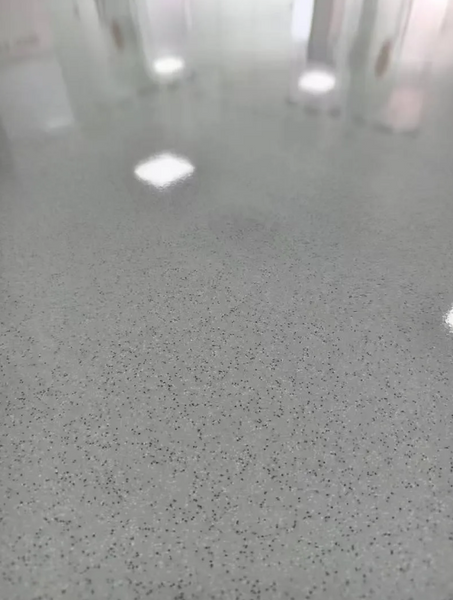
Cause: Aggregate spread unevenly, or an uneven base coat. Worn or stained concrete can also show through.
Prevention: Distribute the quartz aggregate evenly right after pouring each section. Work in 100 to 150 sq ft sections, overlap 4 to 6 inches and keep a wet edge. Use primer on worn or stained concrete. If you are adding epoxy color paste, mix it into Part A before combining with Part B.
Hot tire pickup
Cause: Driving on the floor before it has fully cured, or a coating that went down too thin. Warm tires soften and grab a coating that is not ready for them.
Prevention: Keep vehicles off for about 5 days. Light foot traffic is fine after 24 hours, full cure is 72 hours, but heavy traffic and driving need the extra time. Apply the full kit coverage so the coating has proper thickness. Use primer on floors that will see heavy vehicle traffic.
Two more things people do not expect
- Cracks come back. An epoxy coating does not stop a slab from moving. Fill existing cracks before coating, but new cracks from soil movement or settling can still appear. See does epoxy stop a garage floor from cracking.
- Sun causes ambering. Bisphenol A epoxy can amber over time in direct sunlight, and the indoor kit lacks strong UV protection. Do not use it on patios, driveways, pool decks or in direct sun. Outdoor jobs use the outdoor washed stone quartz epoxy kit.
A short checklist before you pour
- Moisture test done and relative humidity below 65%
- Floor ground, cracks filled, dust vacuumed, water droplet test passed
- Primer applied and tack free, if your floor needs it (primer is sold separately)
- Squeegee, defoaming roller, extension pole and spiked shoes ready before you open a bucket, since pot life is 20 to 30 minutes
- Enough kits for the full 100 sq ft per kit
- Gloves, eye protection, respirator and ventilation in place. SDS sheets are at our SDS page.
Planning a job in your area? Our city planning guides cover local conditions, and Phoenix area customers can pick up at our Queen Creek shop with no freight charge.
Quick answers
What is the most common reason an epoxy floor fails?
Surface prep. Our installation guide traces about 95% of epoxy failures back to inadequate prep, like oil left on the slab, an old sealer, or dust that was never vacuumed up.
Why is my epoxy floor still sticky?
A floor that is still tacky after 48 hours was usually mixed at the wrong ratio, under mixed, or cured below 55°F. Warm the room if it is cold. If it is still tacky at 72 hours, call us.
When can I park on a new epoxy floor?
Wait about 5 days before driving or heavy traffic. Light foot traffic is fine after 24 hours and full cure is 72 hours, but tires need the extra time.
Can I fix a problem without tearing out the floor?
Usually. Peeling spots get ground to bare concrete, cleaned and recoated. Bubbles and small flaws get sanded and touched up. A floor with widespread cosmetic issues can be cleaned, abraded and given a fresh coat.
Avoid the common mistakes with real help
Every kit includes free phone support, Monday to Friday, 8am to 5pm Arizona time. Call before you start and we will walk through prep, mixing and cure with you.