
October 27, 2026 · Quartz Epoxy Pro
How long does epoxy take to dry and cure on a garage floor?
Epoxy on a garage floor is ready for light foot traffic after 24 hours, fully cured at 72 hours, and ready for driving after about 5 days. Wait 7 days before it sees water. Those times assume a room around 68°F to 77°F; colder garages take longer, sometimes twice as long or more.
The cure schedule at a glance
These numbers come straight from our installation guide for the indoor quartz sand epoxy kit:
- Working time (pot life): 20 to 30 minutes after mixing begins
- Light foot traffic: 24 hours
- Full cure: 72 hours
- Heavy traffic and driving: about 5 days
- Water exposure: 7 days
Print that list and tape it to the door into the house. It saves arguments.
Dry vs cured: why the difference matters
People ask how long epoxy takes to dry, but epoxy does not dry like paint. It is a two part coating, and it hardens through a chemical reaction between Part A and Part B. The surface can feel firm well before that reaction is finished. Feeling firm is not the same as being ready for a car.
Park too early and hot tires can leave marks or soft spots in a floor that looked done. Hose it down too early and you risk the finish. The schedule above is what we stand behind, so follow it even if the floor looks ready.
What speeds up or slows down curing
Temperature
Temperature is the big one. Apply only between 41°F and 90°F. The ideal cure range is 68°F to 77°F. Below 55°F, cure time can double or more, so the 5 day wait to drive can stretch well past a week in a cold garage.
Heat works the other way. Above 75°F your pot life gets shorter, and above 85°F you should mix and pour in smaller batches. Hot conditions also add bubbles, so on summer jobs start early in the day while it is cooler. If you are in the Phoenix area, our city planning guides help you pick the right time of year and time of day.
Humidity
Relative humidity must be below 65% when you apply. Moisture test the concrete before you start too.
Thickness
1 kit covers 100 sq ft at a target thickness of about one eighth inch. Do not stretch it. A thin coat will not level properly, and streaky, uneven floors usually come from material spread too thin or a room that was too cold. Keep the room above 60°F and use the full 100 sq ft per kit.
Mixing
Mix one kit at a time with a drill and mixing paddle for 3 to 5 minutes, scraping the sides and bottom. Use the mix ratio on the kit label. Hand mixing causes soft spots that never cure properly.
A realistic weekend timeline
A typical job is a weekend: prep and prime on day one, pour on day two. Here is how the whole project lays out for a 2 car garage of about 400 sq ft, which takes 4 kits.
- Day one, morning: sweep, vacuum, degrease, rinse and let dry. Fill cracks and let the filler cure.
- Day one, midday: grind the floor to a texture like 60 grit sandpaper and vacuum every bit of dust. Prep runs 2 to 6 hours or more. Our post on grinding vs acid etching explains why we grind.
- Day one, afternoon: prime if your slab needs it. Primer cures 4 to 24 hours per the label and must be tack free before epoxy goes on. Not sure you need it? Read do I need a primer under garage floor epoxy.
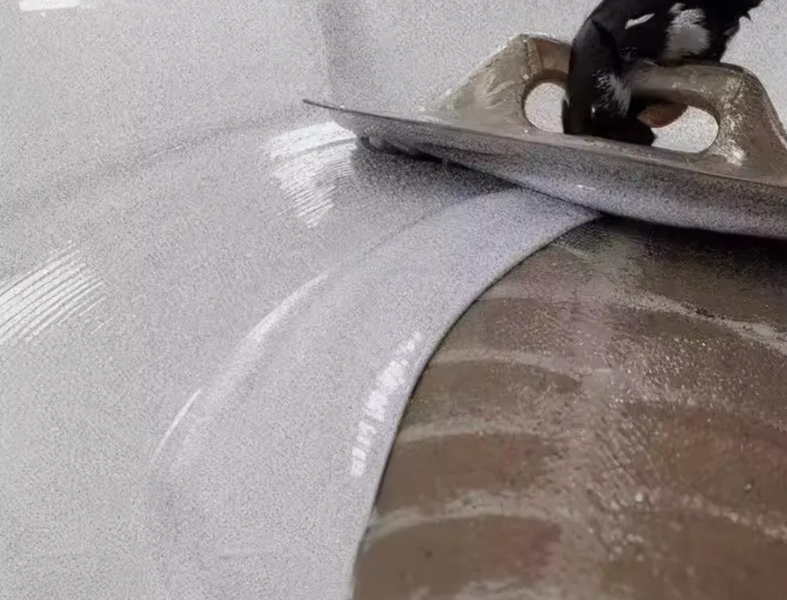
- Day two: mix, pour with the 22 inch squeegee, spread the aggregate, and defoam right away with the defoaming roller.
- Day three: light foot traffic is okay after 24 hours.
- Day five: full cure at 72 hours from the pour.
- About day seven: park the car (about 5 days after the pour).
- About day nine: first wet mop or hose down (7 days after the pour).
Plan where the cars will live for a week before you start. That is the part most people forget.
Protect the floor while it cures
- Ventilate during application and through the 72 hour cure.
- Do not aim heaters or fans directly at the surface.
- Keep children and pets away for the full 72 hours.
- Wear nitrile gloves, eye protection and a respirator while working. SDS sheets are on our SDS page.
- Keep dust and leaves out. Close the garage door once you are done pouring if you can still ventilate another way.
When curing goes wrong
Still tacky after 48 hours. The usual causes are the wrong ratio, under mixing, or cold below 55°F. Warm the room toward the ideal range and give it time. If it is still tacky at 72 hours, call us at 602.600.0781.
Bubbles or pinholes. Not enough defoaming, or hot conditions. See how to fix bubbles in an epoxy floor.
Streaky or not leveling. Applied too thin or too cold.
For the full list of install problems and how to avoid them, read what can go wrong with epoxy flooring. Doing a basement instead of a garage? The same cure times apply; our basement epoxy guide covers the moisture checks. And once you are past day seven, here is how to clean it.
Quick answers
How long before I can walk on a new epoxy garage floor?
Light foot traffic after 24 hours. Socks or clean shoes only, and keep it brief until the 72 hour full cure.
How long before I can park on epoxy?
Wait about 5 days before driving on it or putting heavy traffic on the floor. Cold weather can stretch that, so call us if your garage ran below 55°F.
Why is my epoxy still tacky after 48 hours?
The usual causes are the wrong mix ratio, under mixing, or a garage colder than 55°F. If it is still tacky at 72 hours, call us at 602.600.0781.
Can I use a heater to speed up curing?
You can warm the room toward the ideal 68°F to 77°F range, but do not aim heaters or fans directly at the surface while it cures.
Plan your pour with real numbers
1 kit covers 100 sq ft. Free phone support with every kit, Monday to Friday, 8am to 5pm Arizona time.