
October 27, 2026 · Quartz Epoxy Pro
Should I epoxy my basement floor? What to check first
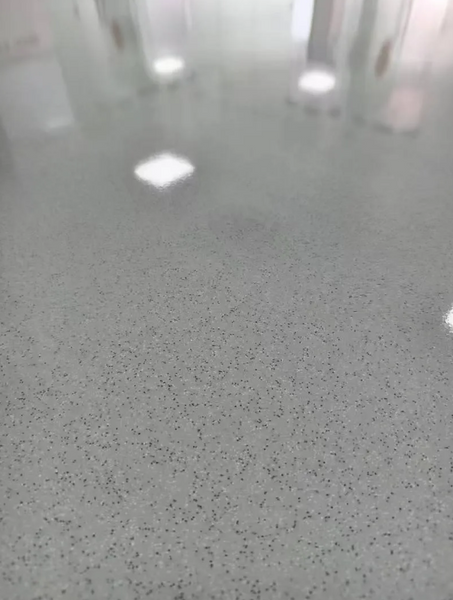
Yes, you can epoxy a basement floor, and a dry, sound slab is one of the best places for it. The catch is moisture: if the concrete passes a moisture test and the room stays below 65% relative humidity, our indoor quartz sand epoxy kit will give you a seamless, textured floor that is easy to clean. If water is coming through the slab, fix that first.
When a basement is a good fit for epoxy
Our indoor kit is a two part bisphenol A epoxy with quartz sand aggregate, made for garages, shops, basements and other interior concrete. A basement checks most of the boxes:
- Stable temperature. Epoxy goes down between 41°F and 90°F and cures best from 68°F to 77°F. Basements tend to sit in that range year round.
- No direct sun. Bisphenol A epoxy can amber over time in direct sunlight. A basement keeps it out of the sun.
- Seamless surface. No grout lines or carpet to trap dust and spills. Sweep, mop, done.
- Texture underfoot. The quartz aggregate gives the surface texture and grip. Factory testing lists a slip coefficient of 0.4 or higher, though slip resistance still depends on how evenly the aggregate is spread and whether the floor is wet or dirty.
When to stop and fix something first
Basements have one big enemy: water. Epoxy is a floor coating, not a waterproofing system, and it will not hold back a slab that is pushing moisture. Hold off if you see any of these:
- Standing water, damp spots or a white powdery residue on the concrete
- Relative humidity at or above 65% (run a dehumidifier and check again)
- A sealer or old coating that makes water bead up
- Active cracks from a slab that is still moving
About cracks: an epoxy coating does not stop a slab from moving. It will not prevent new cracks from soil movement or settling. Fill the cracks you have now before you coat, and read does epoxy stop a garage floor from cracking for the full picture.
Test the slab before you buy
Two quick checks tell you most of what you need to know.
- Moisture test. Our installation guide calls for a moisture test before you start. If the slab is wet, you are not ready.
- Water droplet test. Sprinkle water on the floor. If it soaks in within about 30 seconds, the surface can take coating. If it beads up, there is a sealer or contaminant you need to remove.
Not sure what your results mean? Call us at 602.600.0781. Phone support is free with every kit, Monday to Friday, 8am to 5pm Arizona time.
How many kits for a basement
Same rule as a garage. 1 kit covers 100 sq ft at a target thickness of about one eighth inch. Measure length x width, divide by 100 and round up.
- 200 sq ft rec room: 2 kits
- 400 sq ft open basement: 4 kits
- 500 sq ft basement: 5 kits
Never stretch coverage. A thin coat will not level properly, and streaky or uneven results usually trace back to material spread too thin. More on sizing in how many epoxy kits do I need.
The basement install, step by step
A typical job is a weekend: prep and prime on day one, pour on day two.
Day one: prep and prime
- Sweep and vacuum. Scrub with a concrete cleaner or degreaser, rinse, and let the slab dry fully.
- Fill cracks, pits and holes with concrete patch compound or epoxy crack filler and let it cure. Never use silicone fillers.
- Grind the whole floor with an angle grinder and diamond cup wheel or a rented floor grinder to a texture like 60 grit sandpaper. See grinding vs acid etching for why we grind.
- Vacuum every bit of dust. Leftover dust acts as a barrier layer.
- Prime. Primer is strongly recommended for porous concrete, concrete more than a decade old, previously painted or sealed floors and areas with past moisture issues. Apply it thin with a 9 inch roller or squeegee in 10 x 10 ft sections, do not puddle it, and let it cure per the label (4 to 24 hours) until tack free. Primer is sold separately. Our primer guide covers when you can skip it.
Our guide puts it plainly: about 95% of epoxy failures trace back to inadequate surface prep. Budget 2 to 6 hours or more for prep.
Day two: mix, pour and defoam
- Have your tools ready before you open anything. Pot life is 20 to 30 minutes once mixing begins.
- Mix one kit at a time with a drill and mixing paddle for 3 to 5 minutes, scraping the sides and bottom. Do not mix by hand.
- Start in the far corner and work toward the stairs or exit. Spread with the 22 inch squeegee with pole in 100 to 150 sq ft sections, overlapping 4 to 6 inches and keeping a wet edge. Distribute the quartz aggregate evenly right after pouring.
- Go over each area right away with the 20 inch defoaming roller, 2 to 3 slow passes with 50% overlap. Concrete releases air as the coating goes on, and unpopped bubbles leave pinholes.
Ventilation and safety below grade
Basements do not move much air, so plan for it. Ventilate during application and through the 72 hour cure. Wear nitrile gloves, eye protection and a respirator, and keep children and pets away for the full 72 hours. Do not aim heaters or fans directly at the surface while it cures. SDS sheets are on our SDS page.
Light foot traffic is fine at 24 hours and full cure is 72 hours. Wait 7 days before water exposure, which matters if you plan to mop or if the room has a floor drain. Our post on how long epoxy takes to cure breaks down the whole schedule, and once it is down, how to clean an epoxy floor keeps it looking right.
Is there a downside?
Epoxy is a hard, seamless surface. It is not soft or warm like carpet, and it depends completely on good prep and a dry slab. If you want the honest tradeoffs, read the disadvantages of epoxy flooring before you commit.
Ordering from the Phoenix area? You can pick up locally from our Queen Creek shop with no freight charge. Everyone else, we ship nationwide, and our city planning guides help you plan for your local climate.
Quick answers
Can I epoxy a basement floor myself?
Yes. A dry, sound basement slab is a good fit for our indoor quartz sand epoxy kit. Moisture test first, grind the surface, prime if the concrete is old or has had moisture issues, and work between 41°F and 90°F with humidity below 65%.
How many kits do I need for my basement?
Measure length x width, divide by 100 and round up. One kit covers 100 sq ft at about one eighth inch thick, so a 450 sq ft basement needs 5 kits.
Will epoxy fix a wet basement?
No. Epoxy is a floor coating, not a fix for water coming through the slab. Solve the water problem first, then moisture test before you coat.
Do I need primer in a basement?
Primer is strongly recommended for porous or older concrete and for areas with past moisture issues, which describes a lot of basements. It is sold separately and is not included in the kit.
Ready to finish your basement floor
1 kit covers 100 sq ft. Measure, divide by 100, round up, and call us if your moisture test leaves you unsure.